STRATEGY —
Nothing's Going to Change
The written role a buyer promises rarely survives the first year.
TL;DR: Founders who negotiate a post-close operating role tend to treat it as a settled deal point, something the paperwork protects, but it usually isn't. Even a written, multi-entity contract for continued involvement can fold within months of closing, because the buyer's own capital structure, not the seller's paperwork, decides who actually controls what happens next. The fix isn't a tighter clause; it's treating the role as worth nothing before the negotiation starts, and spending that leverage on terms that actually survive the close.

The Promise at the Table
We sold Traffic & Conversion Summit into a company backed by Blackstone, and the pitch before we signed was almost word for word what every seller hears. No, no, we don't want to change anything. We're just coming in. You built it, you did it right, keep doing what you're doing.
Two months in, it was clear they didn't want us meddling in much of anything. What they actually wanted was to show up, use our names, and talk.
I don't know if I'd call that dishonest. It's close.
It Was in Writing. It Still Didn't Hold
Here's the part that surprises founders more than it should: we had it in writing. Multiple entities, multiple contracts, real language obligating continued involvement on our side. And it still came down to the buyer doing things their way. They bought it. That's their right.
That last part matters more than the grievance. Nobody breached anything. The contract said we'd stay involved, and technically we did. What it couldn't specify was how much any of that involvement would actually shape a decision.
Why the Clause Doesn't Do the Work You Think It Does
Most of these buyers are debt-backed, investor-funded, working off a model with numbers they have to hit on a schedule they didn't set. When that's the structure, they're going to own their own accountability rather than hand it to you and hope it works out. That isn't personal. It's just where the risk sits, and whoever's on the hook for the debt ends up holding the decisions too.
A contract can obligate someone to keep you in the room. It can't obligate them to let the room matter.
Roughly a year is what most of these arrangements actually run, even against a three-year earnout. They want you out, almost always. There are exceptions. But almost always.
M&A advisors who structure these deals for a living land in close to the same range from the outside: plan on staying twelve to twenty-four months post-close, with most sellers seeing the shorter end of that if the buyer is strategic rather than financial. My number from the room and the market's number from the outside agree, which is the part worth sitting with. This isn't one bad buyer. It's the shape of the incentive.
Did you negotiate a post-close role in your last deal (or would you)?
What This Changes About the Negotiation
If the role isn't enforceable, stop negotiating for it as if it were. A three-year consulting agreement that quietly becomes a one-year figurehead position wasn't a win you banked, it was a number you can't spend. Price it at zero going in, and put the energy you'd have spent perfecting that clause into the parts of the deal that don't depend on someone else's goodwill after the wire clears: cash at close, the working capital peg, the walk-away rights.
The role was never the asset. The terms that survive without anyone's cooperation are.
If you want a read on which parts of your own deal would actually hold, the Exit-Ready Score scores the same indicators a buyer will, free, in about five minutes.
— Roland

Thinking About Exiting Your Business?
What Would Buyers See If They Evaluated Your Business Today?
Your Exit-Ready Score reveals the hidden risks that suppress valuation, built on the same indicators private equity uses to screen deals in under 5 minutes.
Find out your score….

Want more than just the weekly deep dives?
On Instagram we share quick tips, behind-the-scenes looks, and first access to what’s coming next.
Follow @RolandFrasier on Instagram and join the community.

Roland’s Riff
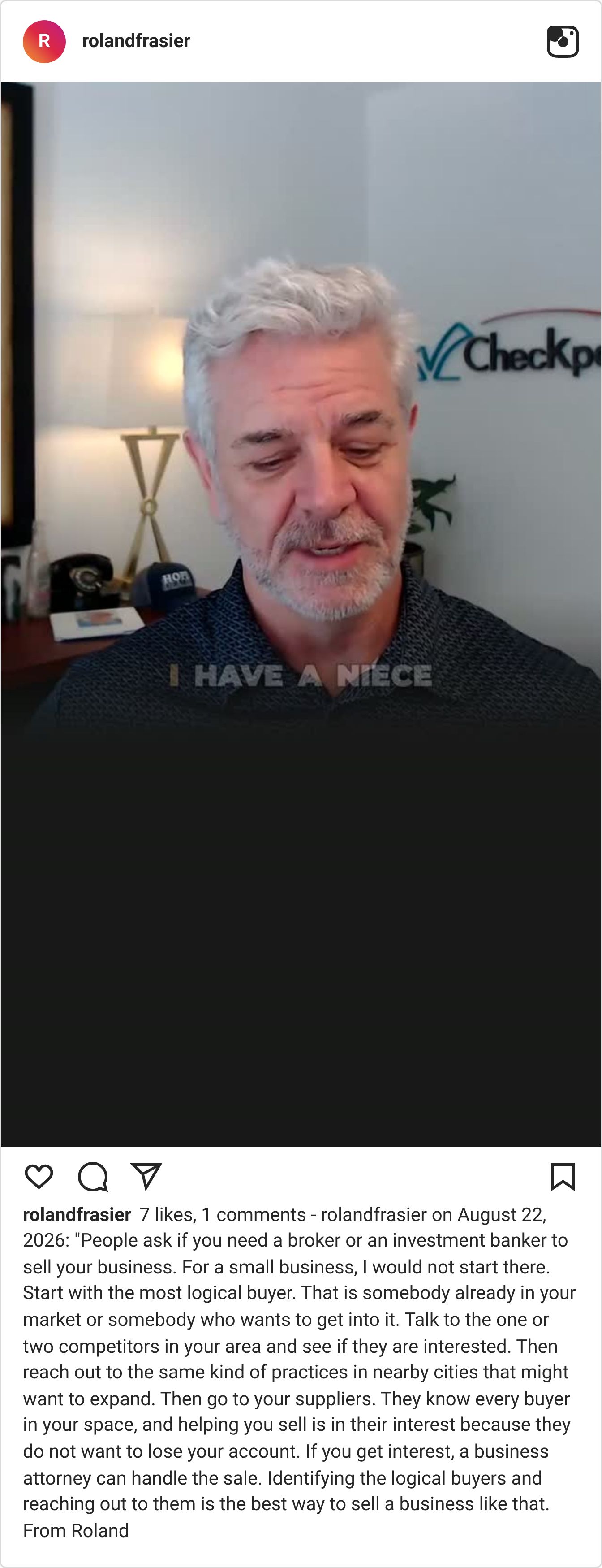
You might not need a broker to sell your business.
Especially if you own a smaller company.
Most owners assume selling means immediately hiring someone to find buyers.
But in many cases, the best buyer is already much closer than you think.
They may already understand your market, know your customers, or have a strategic reason to pay attention to what you've built.
The challenge isn't always finding more buyers.
It's knowing where to look for the most logical ones first.
Want to see where I'd look for a buyer before hiring a broker?