M&A —
Your Best Relationships Don't Transfer
Loyalty doesn't survive a transaction. Structure does.
TL;DR: Relationships kept because of the founder's personal history are founder dependencies, not business assets. They don't transfer in a sale, and they compress your multiple. The work of replacing sentiment with structure is the same work that makes the business valuable without you in it.

Loyalty, Structure, and Transferable Value
I've spent a lot of time this week thinking about the cost of unexamined relationships inside a business. But there's a deeper structural point underneath the Loyalty Tax that's worth pulling out on its own.
Every relationship in your business that exists because of history rather than current value is a form of founder dependency.
Think about it. That vendor stays because you have the relationship. That team member stays in the role because you remember what they did five years ago. That partner keeps their terms because the handshake was with you.
Remove the founder, and every one of those arrangements gets re-evaluated. Which means they aren't really business relationships. They're founder relationships. And founder relationships don't transfer.
Why This Matters for Enterprise Value
Transferable value, the kind buyers actually pay a premium for, requires that every part of the business can be evaluated on its current merits by someone who wasn't there for the origin story. If the only reason a relationship exists is the founder's personal history, it's a dependency, not an asset.
This is one of the things we spend real time on inside Scalable, helping founders audit the structural dependencies hiding inside their business and replacing sentiment-based arrangements with ones that stand on their own. Not because sentiment is wrong, but because sentiment doesn't survive a transaction. Structure does.
The founder who does this work before a buyer forces it captures the value. The founder who waits gives it away at the negotiating table.
My Perspective
The goal isn't to strip the humanity out of your business. It's to make sure the business works without your personal history holding it together. When every relationship, every contract, every role can be understood and justified by someone who just walked in the door, you've built something transferable.
That's the difference between a business that needs you and a business that's worth something without you. The Loyalty Tax is just one of the ways founders blur that line without realizing it.
— Roland
P.S. If you're wondering where your business has structural dependencies hiding in plain sight, this is exactly the kind of thing we help founders see clearly inside Scalable.

Want more than just the weekly deep dives?
On Instagram we share quick tips, behind-the-scenes looks, and first access to what’s coming next.
Follow @RolandFrasier on Instagram and join the community.

Thinking About Exiting Your Business?
You’ve built something incredible, now it’s time to make sure you get the most from your exit. We’ve helped countless entrepreneurs maximize their business sales, ensuring they walk away with more than just a deal, they walk away with the best deal possible.
Want to see what’s possible for you? Schedule a complimentary call today to see how I can help you get the most out of your exit.

Whats Going On Recently
Keep More Of Your Money: PRIME can show you how to protect yourself, grow assets, build business funding, and how to take advantage of 250+ unique tax deductions.

Zero Down Book | Free Copy
This Book Reveals Little-Known Wall Street Insider Strategy To Quickly Acquire Profitable Businesses Worldwide, Without Using Your Own Money or Credit...

Roland’s Riff
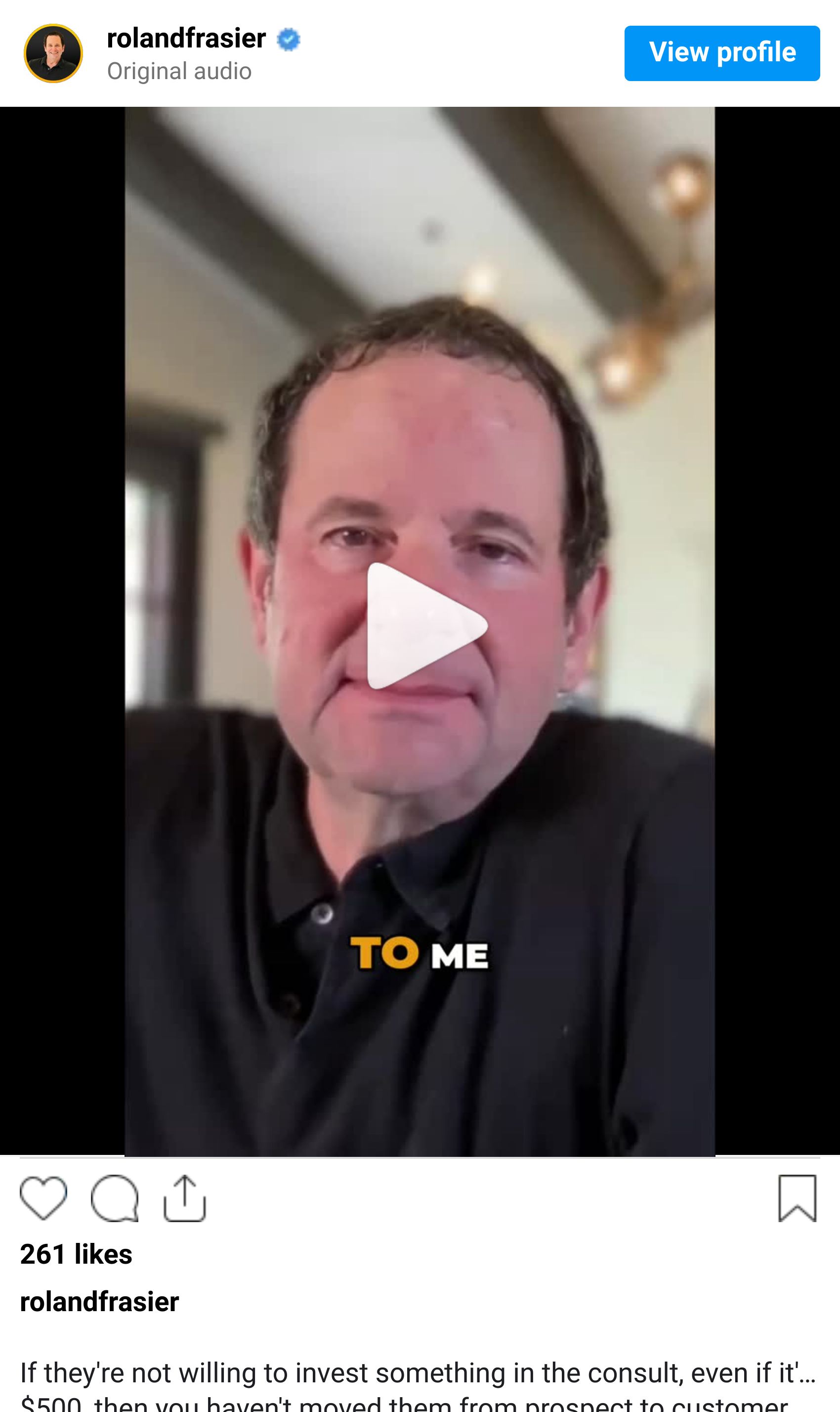
If they won’t pay for a small step, they won’t buy the big one.
Most people stay stuck trying to convert prospects who were never really committed.
There’s a clear line between someone who’s interested… and someone who’s invested.
Once that line is crossed, the entire dynamic changes, how they see you, how they engage, and how decisions get made.
The shift isn’t about the amount. It’s about what happens psychologically the moment money is involved.
Want to see how to turn prospects into real buyers? Watch the video below.